• fr
  • en

29 • 30 • 31 May 2026

  • Infos
  • Press
  • Infos
  • Press
  • fr
  • en
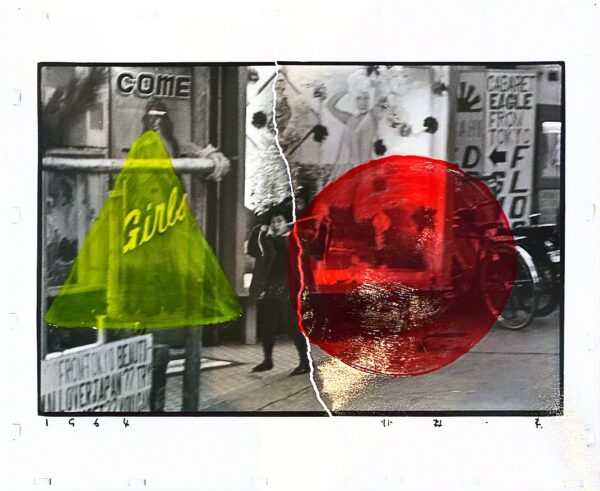
Martin Boyce Spook School, 2016 Giclee Photographic Prints 19 x 12,5 cm each (unframed), 21 parts 52 x 42 x 2 cm each (framed), 21 parts Courtesy the artist and Esther Schipper, Berlin/ Paris/Seoul Photo © Martin Boyce Studio

Galerie Natalie Seroussi

Jérôme Lagarrigue, Here I am, Huile sur toile, 65 x 65 cm, Courtesy Galerie Olivier Waltman.

Galerie Olivier Waltman

Galerie Nathalie Obadia

Fabrice Hyber 1961, France

"Apocalyipstick"

Galerie Nathalie Obadia is pleased to present Apocalyipstick, Fabrice Hyber’s fourth solo exhibition at the gallery, following Habiter la forêt in 2021. Awarded the Golden Lion at the 1997 Venice Biennale, the artist has been developing an ever-expanding oeuvre for over thirty years, in the image of a rhizome: a system of thought and interconnected forms, based on proliferation, transformation and and plastic experimentation. While the Apocalypse – whether ecological, biological or nuclear – pervades contemporary discourse, Fabrice Hyber’s work offers an unexpected flipside. Through a series of new paintings and ceramics, the artist explores this notion not as an inescapable end, but as a passage towards transformation, aiming to reveal, beyond the collapse, the promise of a rebirth in process.

“And when the first angel sounded the trumpet, there followed hail and fire, mingled with blood, and it was cast on the earth. And the third part of the earth was burnt up, and the third part of the trees was burnt up, and all green grass was
burnt up.”

What if, in truth, the Apocalypse was not an end, but a metamorphosis? A call to transform catastrophes into fertile narratives, to play with language to reveal what lies beneath the ashes, waiting to be reborn. This is the dynamic behind Fabrice Hyber’s approach: like a researcher or botanist, he constantly takes notes, measures, calculates and annotates his works, in search of new discoveries. For the artist, the Apocalypse goes beyond the destruction, celebrating “what is reborn in a burnt forest, a dried-up patch of land or a downtrodden community: there are always lives that reappear, words that are reborn, behaviors that persist,” he says.

Fabrice Hyber’s attachment to nature – and to forests in particular – runs deep. Almost thirty years ago, the artist launched an ambitious project: to reforest 70 hectares around his studio in Vendée, an initiative that embodies his vision of nature as a space for regeneration. This dynamic permeates his entire universe, teeming with plants, mushrooms, sprawling roots and “tree-men” reaching for the sky. The organic bond between the cosmos and the earth is evident even in his ceramics, where we see a meteorite splitting the clouds, like an omen. Yet, beneath this apocalyptic tension, some forms remain latent – like “mushroom seeds” buried underground, ready to deploy themselves in the midst of the chaos. These dynamics, observed with an approach that is both scientific and poetic, are in every creative gesture, sketching out endless organic flows.

In this new corpus, featuring pastels, charcoal, oil paint and resin, lipstick makes a comeback – a material already present in his early works. It disrupts the artist’s visual universe, contrasting manufactured culture with organic matter. Lipstick has marked Fabrice Hyber’s career, from Le Mètre carré de rouge à lèvres (1981), his first painting, to Un mètre cube de beauté, a monumental installation presented at the Palais de Tokyo, in 2012-2013. Lipstick – and above all the gesture it implies – goes beyond its simple application. “I’d rather put it on a painting than on lips,” he asserts. “I add something, a possibility, a behavior. An artwork is something extra.”

In the very title of the exhibition Apocalyipstick, everything is already suggested: the chaos and the beauty, the collapse and the brilliance. This neologism incarnates the hybridities so dear to Fabrice Hyber, where play on meaning, linguistic deviations, underground connections and celestial ascents mingle. In this constantly changing world, materials speak for themselves: resin – like sap – binds elements and seals fractures. The application of lipstick becomes a prophetic gesture: it colors catastrophe and reveals “its joyous underside,” according to the artist.

Confronted with global upheavals, contemporary art sometimes neglects its own creative power, losing itself, instead, in the spectacle of destruction to the detriment of invention. Fabrice Hyber opts for a radically different path: Apocalyipstick offers a vision in which past, present and future are intertwined without hierarchy. In the image of John’s Apocalypse (1: 8): “what is, what was, and what is to come,” the artist crosses through different timelines, turning fossils and seeds into symbols of a germinating future. This cycle has its roots in a foundational act: Le Mètre carré de rouge à lèvres, his first painting. Returning to this material is not nostalgia, but a quest for the energy to begin again and again. Each work thus becomes a stratum, a palimpsest, an area of awakening, where collapse is never an end, but a ferment of metamorphosis.

Solo show of Fabrice Hyber

From May 23rd to the end of July, 2025

91 Rue du Faubourg Saint-Honoré
75008 Paris, France
01 42 74 67 68 www.nathalieobadia.com/fr

The gallery

Since the opening of the first gallery in Paris in 1993, followed by the one in Brussels in 2008 and a second space in Paris in 2013, Nathalie Obadia has exhibited emerging and recognized artists of the international contemporary art scene. In the fall of 2021, Galerie Nathalie Obadia has opened a new space in the Matignon Saint-Honoré district in Paris.

For many years, the gallery has also participated in the rediscovery of deceased artists like Martin Barré, Josep Grau-Garriga, and Seydou Keita. The mission of the gallery is also to promote artists to institutions in France and abroad.

Galerie Nathalie Obadia participates in international art fairs : Art Basel, Art Basel Hong Kong, Art Basel Miami Beach, Paris+ by Art Basel, Paris Photo, Art Genève, Art Dubai, Art Brussels, Art Luxembourg, Art Paris, 1-54 Marrakech, TEFAF Maastricht, TEFAF New York among others.

Gallery artists

Brook Andrew, Edgar Arceneaux, Martin Barré, Nú Barreto, Valérie Belin, Carole Benzaken, Guillaume Bresson, Rosson Crow, Luc Delahaye, Patrick Faigenbaum, Roland Flexner, Roger-Edgar Gillet, Quentin Gouevic, Josep Grau-Garriga, Laura Henno, Fabrice Hyber, Shirley Jaffe Estate, Hoda Kashiha, Seydou Keïta, Sophie Kuijken, Robert Kushner, Guillaume Leblon, Eugène Leroy, Romana Londi, Lu Chao, Rodrigo Matheus, Meuser, Johanna Mirabel, Youssef Nabil, Youssef Nabil, Frank Nitsche, Manuel Ocampo, Shahpour Pouyan, Laure Prouvost, Jorge Queiroz, Fiona Rae, David Reed, Antoine Renard, Jason Saager, Sarkis, Andres Serrano, Jessica Stockholder, Mickalene Thomas, Nicola Tyson, Joris Van De Moortel, Agnès Varda, Viswanadhan, Wang Keping, Brenna Youngblood, Ni Youyu, Jérôme Zonder

In the thematic « Art contemporain »

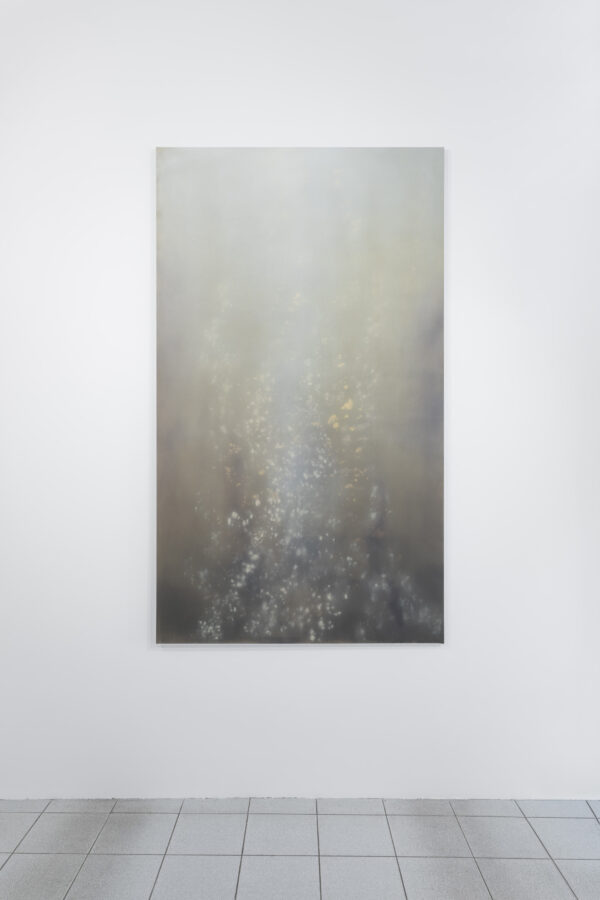
Valentin Rilliet, Untitled, 2025, oil and sand on linen, 130 x 90 cm (51 ⅛ x 35 ⅜ in.). Courtesy de l’artiste et de la Galerie Peter Kilchmann Zurich/Paris

Galerie Peter Kilchmann

Valentin Rilliet 1996, Switzerland / China

"The Dream Synopsis"

Tai Shani, Our Astrolatrous Commune, 2023 © Fabio Mantegna

Galerie Suzanne Tarasieve

Carte blanche à Camille Bréchignac

--

Tai Shani 1976, England

Guillaume Castel, Palma, acier Corten et inox, 19 x 25 x 29 cm, 2024, Courtesy Galerie Ariane C-Y, œuvre Guillaume Castel, ©image Gregory Copitet.

Galerie Ariane C-Y

Guillaume Castel 1980, France

"Jardin des simples"

In the thematic « Contemporary Art »

Hans Josephsohn, Untitled, 1971, Brass, 66 x 218 x 59 cm (25,98 x 85,83 x 23,23 in), Ed. 2 of 6 + 2 AP, Courtesy Galerie Thaddaeus Ropac, London · Paris · Salzburg · Milan · Seoul
© Josephsohn Estate

Thaddaeus Ropac

Hans Josephsohn 1920 — 2012, Switzerland

"Sculptures 1952 - 2002"

Giorgio Morandi, Fiori, 1943, huile sur toile, 35,5 × 25,5 cm, Bertozzi & Casoni, Per Morandi, 2020, céramique polychrome et bronze, H. 50,5 × 31,5 × 32,5 cm Courtesy of Galleria Maggiore g.a.m.

Galerie d’Art Maggiore g.a.m.

Giorgio Morandi et Bertozzi & Casoni

--

"La rencontre entre le quotidien et l’extraordinaire"

Famakan Magassa, L’AMOUR ET LA JUSTICE, Acrylique et pastel à l'huile sur toile, 150 X 130 CM, 2025, copyright galerie Sabine Bayasli

Galerie Sabine Bayasli

Famakan Magassa 1997, Mali

"La vie est un compte"

In the thematic « Painting »

Paula Siebra, Mesa de cabeceira com revólver, luvas e flor | Table de chevet avec revolver, gants et fleur, 2025, huile sur toile, 30 x 40 cm, MW.PSI.267, Photo credit: EstudioEmObra, Courtesy of the artist and Mendes Wood DM, São Paulo, Brussels, Paris, New York, Copyright The Artist

Mendes Wood DM

Paula Siebra 1998, Spain

"O estranho familiar"

Titina Maselli, Calciatori e città, 1973, Acrylic on canvas

Galerie Raphaël Durazzo

Titina Maselli 1924 — 2005, Italy

"Panta Rhei – Everything flows"

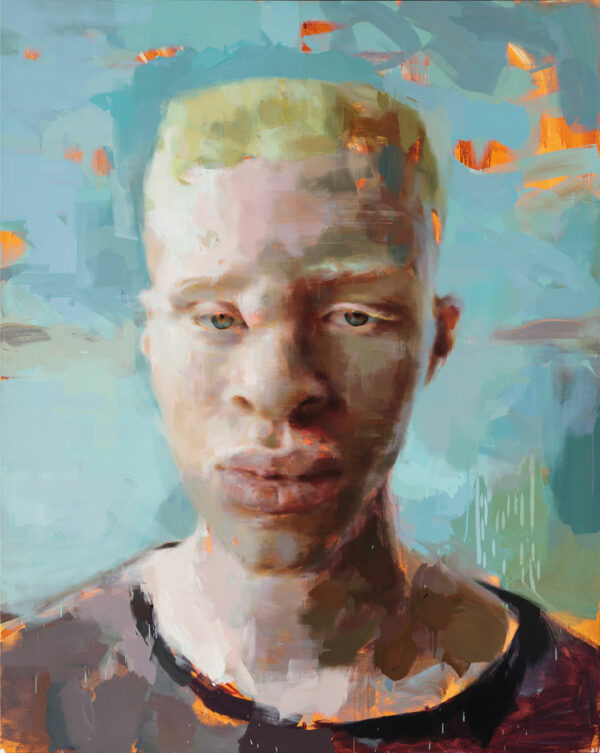
Axel Pahlavi, Poussière de Lumière, 2025, oil on wood, 64 x 96 cm, Courtesy H Gallery, Paris

H Gallery

Axel Pahlavi 1975, Iran

"Hyperclassique" // "Abîme moderne" // " Intégrale du réel"

In the thematic « Peinture »

Afaf Zurayk, untitled, watercolour and crayon on canvas, 40x40cm. Courtesy of the artist.

15 Beautreillis

Amy Todman, Afaf Zurayk

--

"Light Enters"

Joris Van de Moortel
music enjoys direct access to the soul, has an immediate echo of response since we have music within ourselves, 2025, Huile sur lin et cadre en acier de l’artiste avec deux sculptures de tête faites en résine acrylique et patine effet bronze (une avec le nez droit et une avec le nez cassé)

Galerie Nathalie Obadia

Joris Van de Moortel 1983, Belgium

"Le poids du ciel illumine la terre"

 Installation view, Zander Galerie, Cologne 2024, featuring works by Ed Ruscha: If You Ever Tell I'll Hurt Your Mama Real Real Bad, 1994, If No Cash By Noon You Will Have Visitors, 1997, Do As Told Or Suffer, 1997, and A Columbian Necklace for You, 1997.

Zander Galerie

Ed Ruscha 1937, United States

"Cityscapes"

In the tour « Matignon »

Perrotin

Exposition collective

PABLO PICASSO (1881-1973), Femme agenouillée se coiffant,  1906, Numéroté : 1/10,
Porte le cachet du fondeur : C. Valsuani Cire Perdue, Bronze à patine nuancée, Hauteur : 40 cm. Succession Picasso 2025. Crédit Photo : Cécil Mathieu

HELENE BAILLY

Pablo Picasso 1881 — 1973, Spain

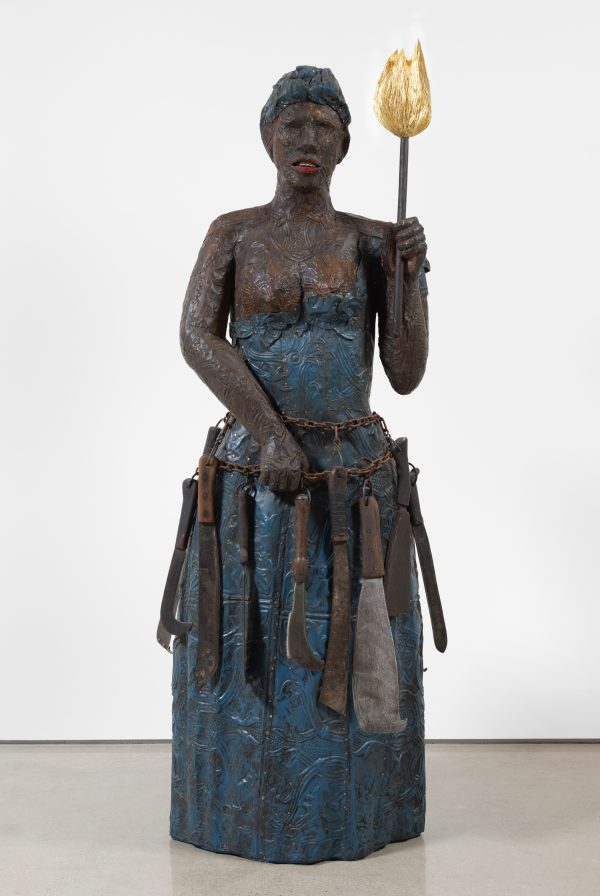
Photo by Matt Emonson

Galerie Lelong

Alison Saar 1956, United States

"Sweet Life"

  • Subscribe to the newsletter

organisation.pgw@comitedesgaleriesdart.com

Facebook — Instagram

PGW is organized by